Papal Fortifications & the 1527 Sack – Bastions and Survival
How papal fortifications reshaped Castel Sant'Angelo and how the 1527 Sack of Rome exposed and validated its defensive logic.
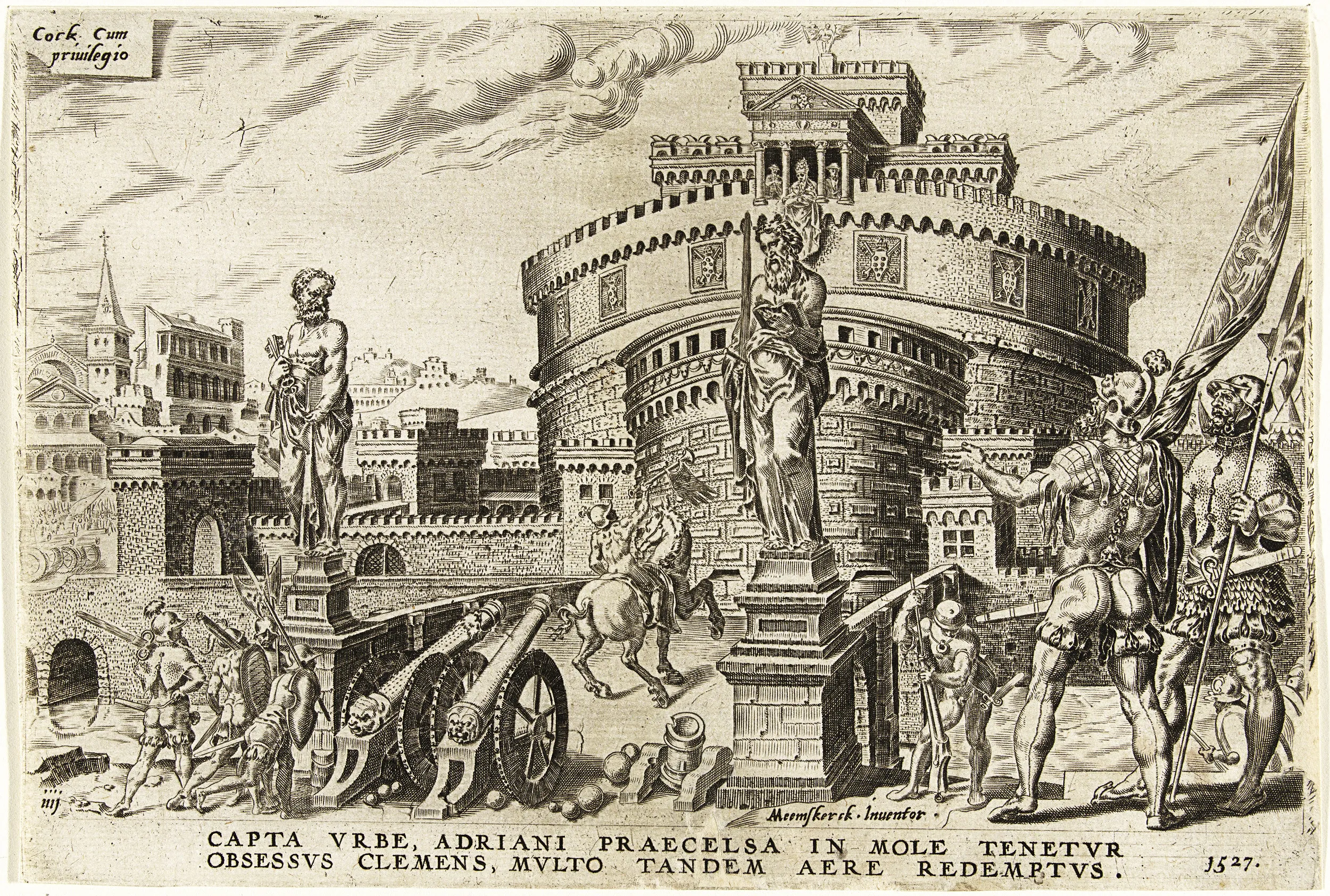
Fortification was a long project: Boniface IX prepped for cannon age; Nicholas V layered crenellations, towers, and stores; Alexander VI added bastions, moat, and cells.
1. The Fortification Phases
- Boniface IX: foundations for artillery; prison use formalized.
- Nicholas V: crenellated curtain, three towers, logistics rooms for grain and oil—siege resilience.
- Alexander VI: fourth tower, bastions, moat, torture rooms; a hard edge to papal power.
2. 1527: Failure of Politics, Trial by Fire
Troops unpaid; discipline collapsed. Churches sacked, libraries looted, bodies unburied—disease followed. Clement VII survived via Passetto, but Rome’s population collapsed from ~55,000 to under 10,000.
3. Inside the Fortress During the Crisis
- Apartments served governance and refuge; the Stufetta offered modern comforts—jarring contrast to agony outside.
- Artillery platforms used; defensive choreography managed entry flows along ramp.
4. Aftermath & Memory
Trauma redirected papal policy and patronage; the fortress remained symbol of last-resort sovereignty.
Bottom Line
By 1527 the castle was more than walls—it was Rome’s nervous system under attack. The fortress held; the city changed forever.
About the Author

Telmo Rolando
I wrote this guide to help you explore Castel Sant’Angelo with confidence — clear tickets, smart routes and the highlights you shouldn’t miss.
Tags
Comments (0)
Loading comments...