Castel Sant'Angelo Engineering – Core Mausoleum, Ramps, Bastions & Reuse
Engineering of Castel Sant'Angelo explored: cylindrical mausoleum, internal ramp, structural mass, Renaissance bastion retrofits, and artillery adaptations.
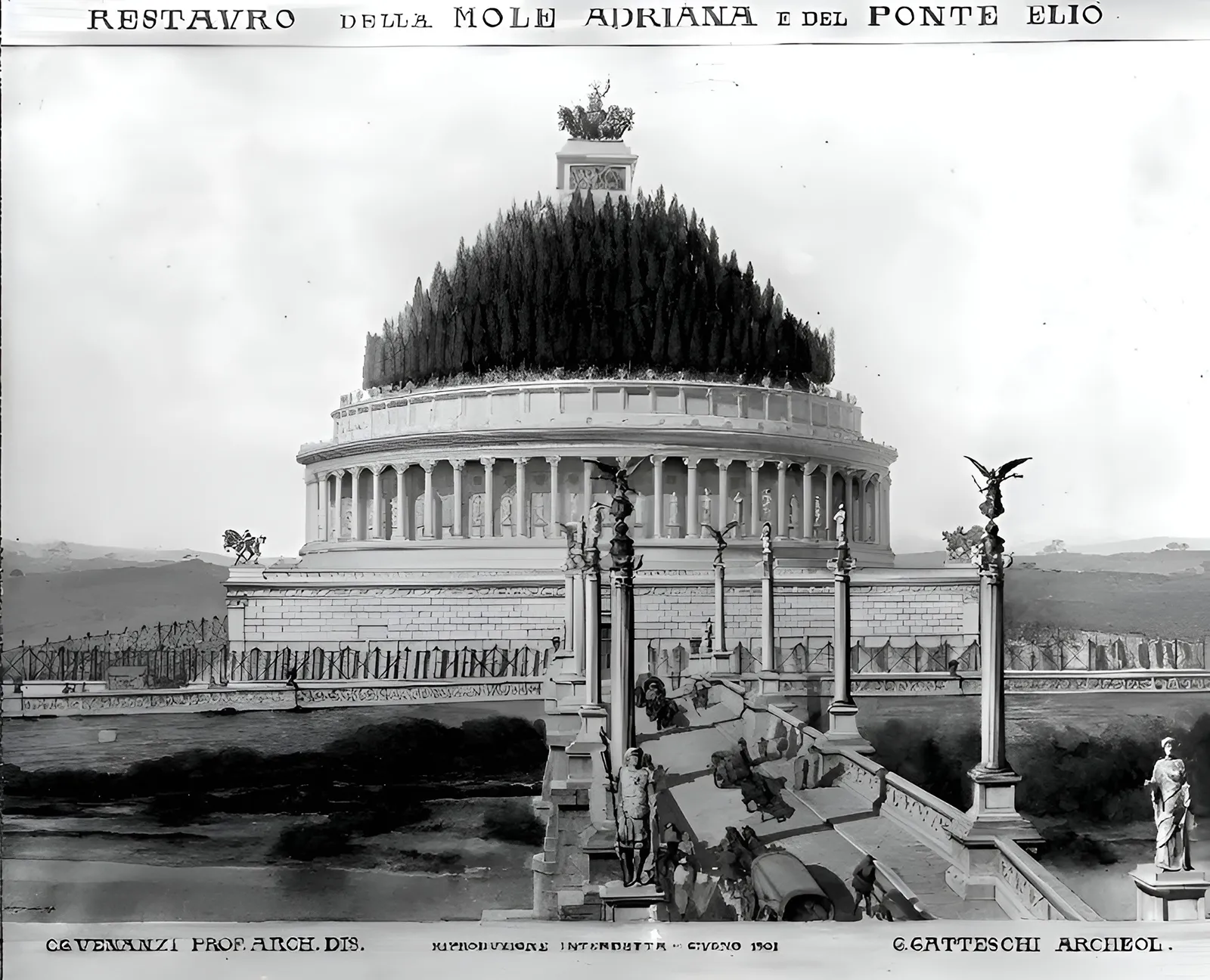
The castle's architectural story is one of layering: a funerary cylinder swallowed by successive defensive envelopes.
1. Original Geometry
- Massive cylindrical drum (approx. 64 m diameter) atop square base.
- Central burial chamber accessed by helical ramp—funerary procession choreography.
- Superstructure likely carried decorative garden / statuary (lost), reducing vertical load vs later battlements.
2. Helical Ramp Mechanics
| Feature | Function | Visitor Impact |
|---|---|---|
| Gradual incline | Processional dignity; stable ascent | Comfortable climb vs abrupt stair flight |
| Thick masonry walls | Thermal inertia; structural shear resistance | Stable interior climate |
| Limited lateral openings | Security & structural continuity | Dramatic light transitions |
3. Fortress Adaptations
Renaissance artillery demands triggered addition of polygonal bastions. The mausoleum mass offered anchor points resisting cannon recoil vibrations.
Load Path Adjustments
Artillery platforms imposed concentrated loads; reinforcement through filling voids, adding buttressing earthworks, redistributing stress across thicker parapets.
4. Material Palette
- Roman concrete core with tufa & brick facings.
- Later travertine restorations patch erosion zones.
- Iron clamps (Renaissance) localized—corrosion monitoring part of conservation.
5. Defensive Features Layering
| Layer | Period | Key Element | Purpose |
|---|---|---|---|
| Mausoleum Drum | Hadrianic | Helix + burial chamber | Dynastic internment |
| Early Fort | Medieval | Basic wall crenellations | Local power assertion |
| Papal Fortress | Renaissance | Bastions, casemates, artillery ramps | Papal defense / control |
| Modern Museum | 20th–21st c. | Visitor circulation aids, lighting | Interpretation & safety |
6. Drainage & Environmental Control
Interior ramp slight camber guides moisture to side channels; terrace drains avoid pooling that accelerates stone decay.
7. Structural Comparisons
| Structure | Form | Original Use | Later Use |
|---|---|---|---|
| Mausoleum of Augustus | Earthen tumulus + ring | Imperial burial | Park monument |
| Castel Sant'Angelo | Cylindrical masonry core | Imperial burial | Fortress + museum |
| Torre di Nona (lost) | Tower | Urban defense | Prison (historic) |
8. Experiential Engineering Tip
Pause mid-ramp; note acoustic softening & temperature drop—masonry mass moderates climate much like passive cooling.
Bottom Line
Engineering resilience stems from massive continuous masonry adapted cleverly for evolving defensive technologies without erasing funerary origins.
About the Author

Telmo Rolando
I wrote this guide to help you explore Castel Sant’Angelo with confidence — clear tickets, smart routes and the highlights you shouldn’t miss.
Tags
Comments (0)
Loading comments...