Castel Sant'Angelo vs Fortified Sites – Reuse & Symbolism
Comparison of Castel Sant'Angelo with other Roman fortified sites: adaptive reuse, urban integration and symbolic layering evolution.
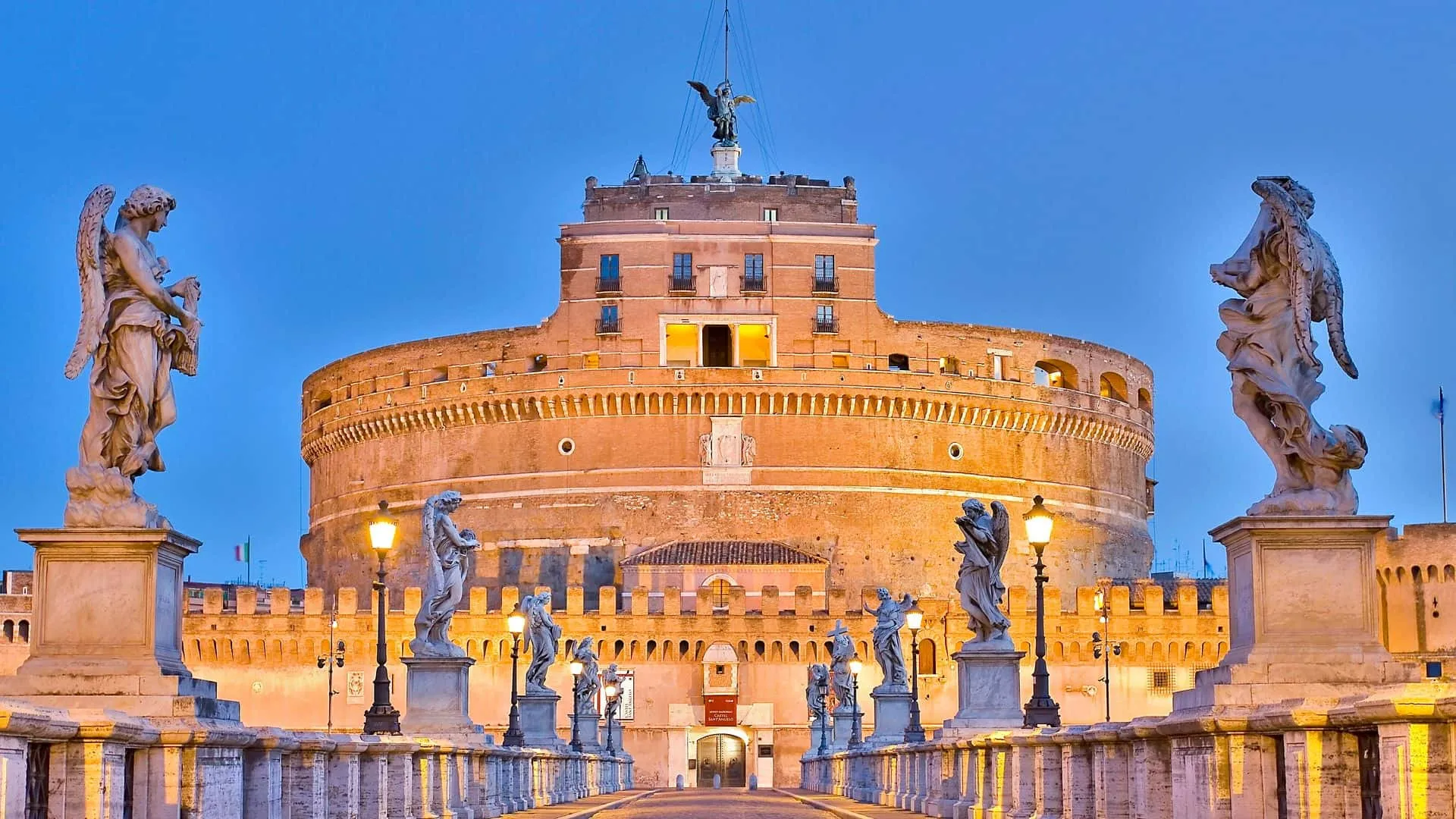
Castel Sant'Angelo's uniqueness lies less in raw fortification metrics and more in identity metamorphosis.
1. Comparison Table
| Feature | Castel Sant'Angelo | Mausoleum of Augustus | Coastal Fort (e.g., Ostia structures) |
|---|---|---|---|
| Original Purpose | Imperial mausoleum | Imperial mausoleum | Port defense |
| Reuse Intensity | Extreme (fortress, prison, museum) | Moderate (park monument) | Functional (defense) |
| Urban Position | River nexus + Vatican adjacency | City core piazza | Coastal / port perimeter |
| Symbolic Layers | Imperial → Papal → National → Cultural | Imperial → Civic park | Military → Archaeological |
| Vertical Experience | Helical ramp to terrace | Open park mound | Stair / platform |
2. Adaptive Reuse Trajectory
Sant'Angelo integrates successive strategic paradigms (funerary display, military bulwark, papal refuge, museum) without erasure—palimpsest effect.
3. Urban Integration
River crossing control + corridor to Vatican creates a hybrid civic-sacred spatial node—distinct from isolated coastal forts.
4. Symbolic Density
Angel legend + papal apartments compress theological + political narratives; other sites often maintain singular heritage layer.
5. Experiential Shift
Visitor senses ascending transformation—each ramp segment reveals function change markers (weapon slots → frescoed chambers → open skyline).
Bottom Line
Relative to other fortified or repurposed Roman sites, Castel Sant'Angelo stands as an intensive case study in layered urban heritage resilience.
저자 소개

Telmo Rolando
이 독립 편집 안내서는 공식 방문 정보와 신뢰할 수 있는 역사 자료를 요약하며 산탄젤로 성 또는 이탈리아 문화부와의 제휴를 주장하지 않습니다.
Tags
Comments (0)
Loading comments...