Castel Sant'Angelo vs Fortified Sites – Reuse & Symbolism
Comparison of Castel Sant'Angelo with other Roman fortified sites: adaptive reuse, urban integration and symbolic layering evolution.
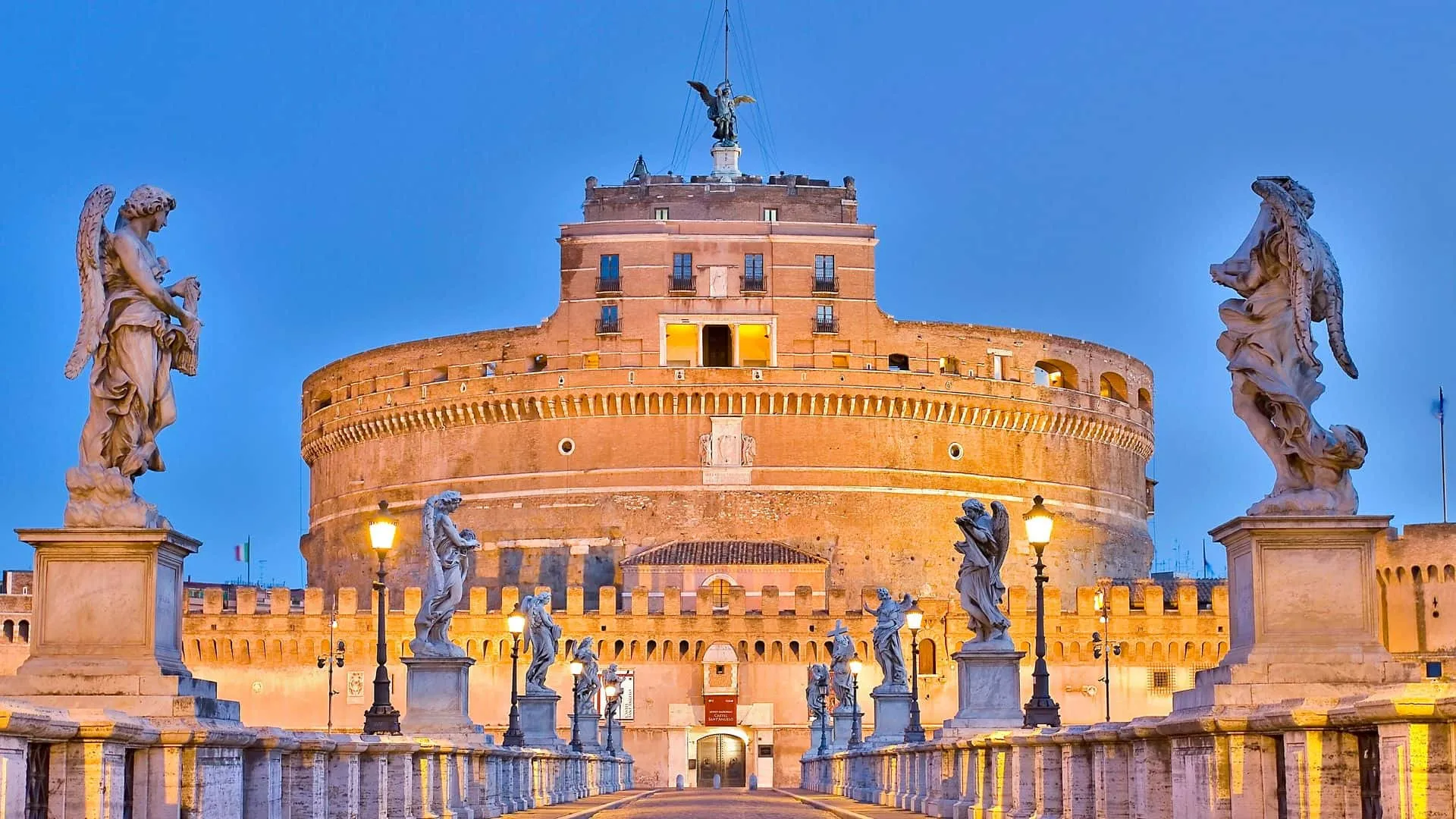
Castel Sant'Angelo's uniqueness lies less in raw fortification metrics and more in identity metamorphosis.
1. Comparison Table
| Feature | Castel Sant'Angelo | Mausoleum of Augustus | Coastal Fort (e.g., Ostia structures) |
|---|---|---|---|
| Original Purpose | Imperial mausoleum | Imperial mausoleum | Port defense |
| Reuse Intensity | Extreme (fortress, prison, museum) | Moderate (park monument) | Functional (defense) |
| Urban Position | River nexus + Vatican adjacency | City core piazza | Coastal / port perimeter |
| Symbolic Layers | Imperial → Papal → National → Cultural | Imperial → Civic park | Military → Archaeological |
| Vertical Experience | Helical ramp to terrace | Open park mound | Stair / platform |
2. Adaptive Reuse Trajectory
Sant'Angelo integrates successive strategic paradigms (funerary display, military bulwark, papal refuge, museum) without erasure—palimpsest effect.
3. Urban Integration
River crossing control + corridor to Vatican creates a hybrid civic-sacred spatial node—distinct from isolated coastal forts.
4. Symbolic Density
Angel legend + papal apartments compress theological + political narratives; other sites often maintain singular heritage layer.
5. Experiential Shift
Visitor senses ascending transformation—each ramp segment reveals function change markers (weapon slots → frescoed chambers → open skyline).
Bottom Line
Relative to other fortified or repurposed Roman sites, Castel Sant'Angelo stands as an intensive case study in layered urban heritage resilience.
Om författaren

Telmo Rolando
Jag skrev guiden för att hjälpa dig utforska tryggt — tydliga biljetter, smarta vägar och höjdpunkter.
Tags
Comments (0)
Loading comments...